What OKX is
OKX has been running since 2017 and belongs to the small group of exchanges with a complete derivatives set: not only perpetual futures, but dated ones and options too. This is a venue for people who have outgrown simply buying bitcoin.
Its second distinction is a full Web3 ecosystem. A wallet, access to decentralised exchanges and its own X Layer network are built into the same app, so you never switch between exchange and wallet.
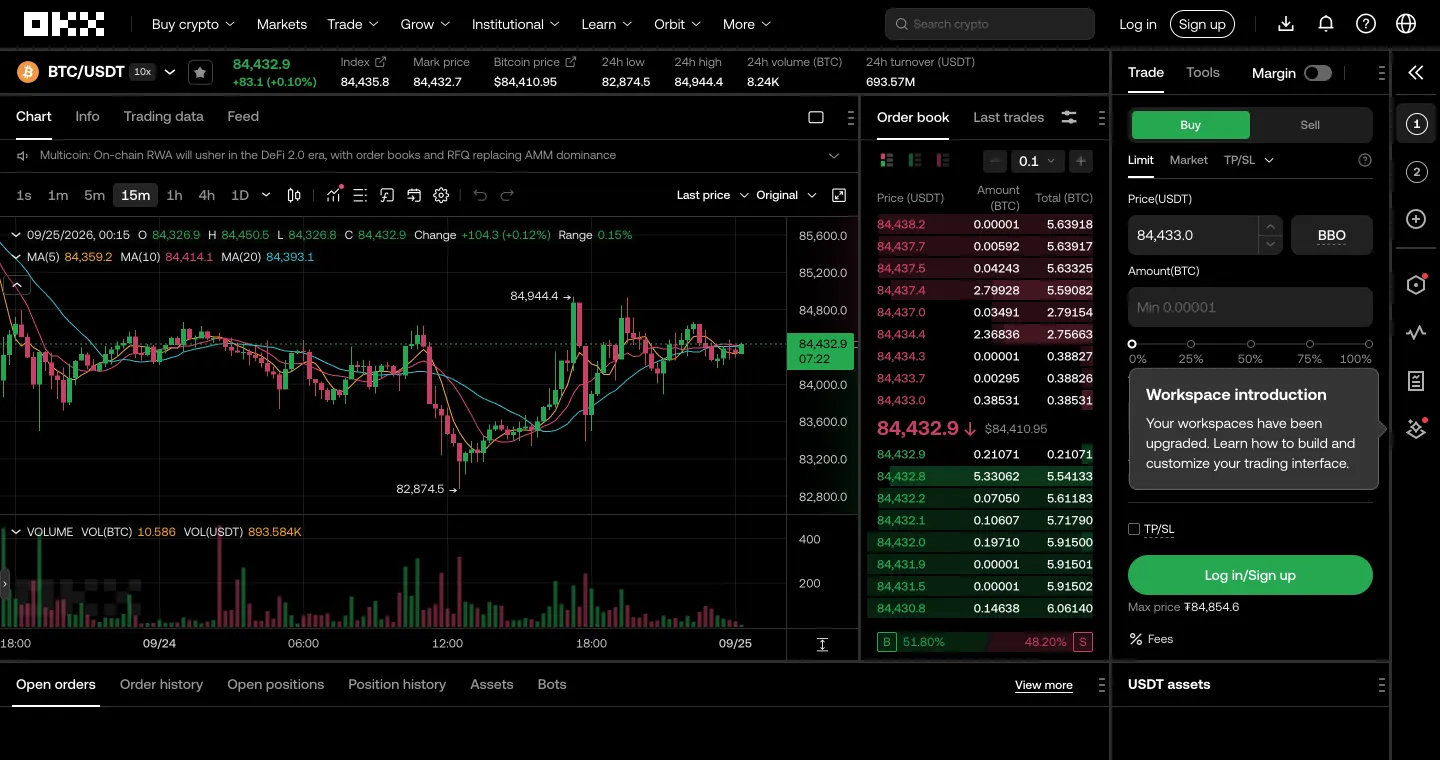
What you get here
Spot — over four hundred USDT pairs, plus two hundred and seventy-two pairs quoted directly in euro: second only to Kraken in our review on that count.
Futures — perpetual and dated, almost five hundred contracts.
Options — a proper section, not a formality.
P2P — crypto for ordinary money straight from people, with the exchange in escrow.
Earn — savings, staking, dual investments and structured products.
Jumpstart — take part in new token launches.
Copy trading and bots — mirror other traders or run automated strategies.
Web3 wallet — non-custodial, with access to decentralised exchanges and apps from the same interface.
Fees and where the real saving is
Entry level is a tenth of a percent for takers and slightly less for makers, falling with volume and with OKB held on the balance.
The main saving here is not the trading fee but the transfers: OKX runs its own X Layer network, and USDT withdrawals there are free. Sixteen networks in total. If you move coins often, that detail matters more than a couple of hundredths of a percent per trade.
Deposits and withdrawals
P2P works the usual way: pick an offer, send the payment, the crypto is released from escrow.
Current network fees are in the live table at the top of this page — we collect them straight from the exchange.
Who it suits
People who need options and dated futures, which few venues offer. People working with both centralised and decentralised markets, since this is one window for both. And anyone counting in euro: two hundred and seventy-two direct pairs remove the extra hop through USDT.


