Two different dollar rates, and that is normal
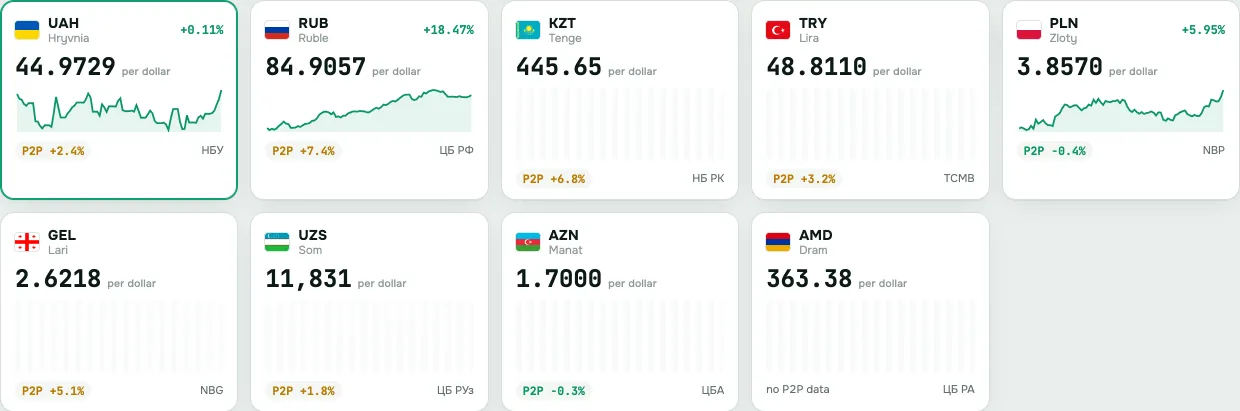
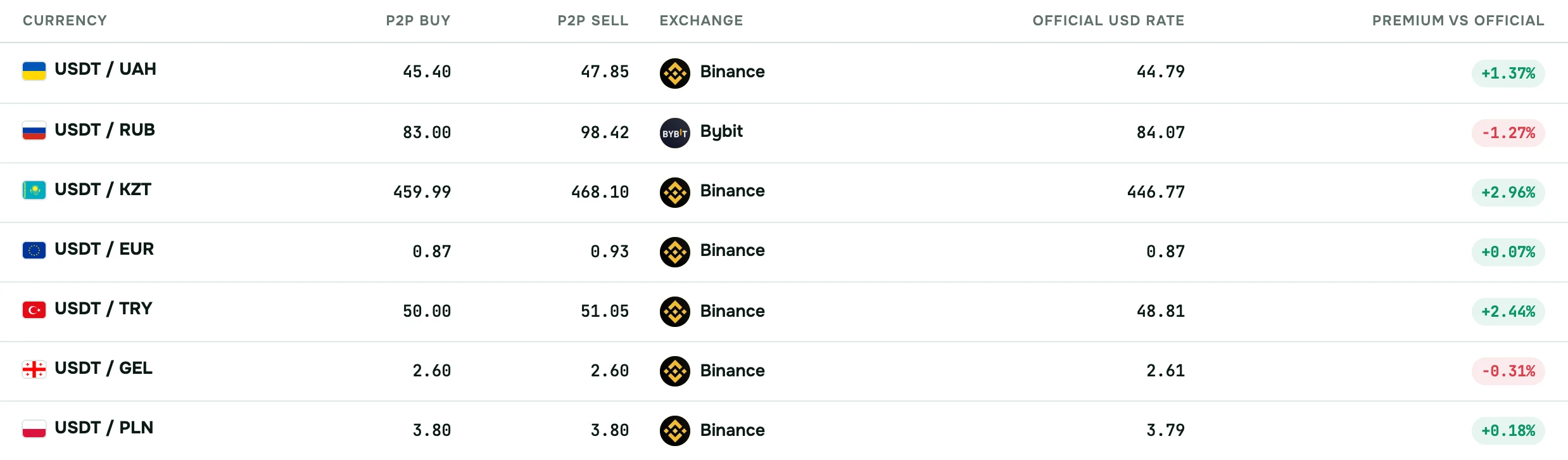
The official rate is set by a central bank. The P2P rate is whatever people are willing to pay right now. They almost never match, and the gap is called the premium.
The premium is not an anomaly or a trick. It is the price of availability: what the market will pay for a dollar obtainable immediately, without a trip to a bank.
Where the premium comes from
- Restrictions on buying currency. Where banks sell dollars with limits, the crypto premium is higher.
- Demand for moving money abroad. USDT solves that faster than a bank.
- Trust in the local currency. Stronger devaluation expectations mean a higher premium.
- Weekends and holidays. Banks close, P2P does not, and the premium creeps up.
The useful consequence: the premium is persistently higher where currency is harder to buy the ordinary way. That is structural, not a passing anomaly.
How to use it
The premium is an indicator, not a route in itself. It answers the question of which currency is currently worth working in.
- Open exchange rates and look at the premium for the directions you care about.
- A high premium means selling USDT in that currency pays well and buying is expensive.
- Then go to P2P rates and look at actual offers with limits.
What to understand about the premium
The premium is not your profit. You cannot buy a dollar at the official rate — that is precisely why the premium exists. It shows the state of the market, not available money.
Earnings come from the difference between venues, not from the difference with a central bank rate.
Where our numbers come from
Official rates come from central banks. P2P rates come from live offers on the venues we poll. The dollar-to-USDT rate is computed from live USD pairs rather than assumed to be one: USDT itself regularly trades at 0.9996–0.9998.
We cover eighty-nine currencies. The currency is not picked by country: choose the one you need yourself.
Frequently asked
Why is the premium negative? Because the dollar in crypto is cheaper than the official rate. It happens in countries with free currency markets and during a supply glut.
Can I earn on the premium itself? Not directly: you cannot buy at the official rate. The premium helps pick a direction; the earnings come from venue differences.
Why does your rate differ from what I see on the exchange? We show the best executable price with available size, not the first offer on the list.